Exposure: A Bold Choice for High-Impact Visual Design
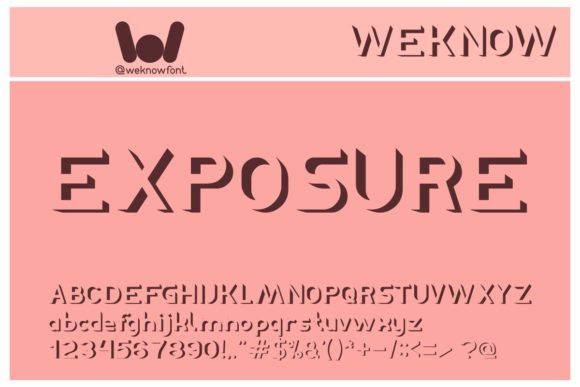
In the crowded landscape of digital and print media, capturing attention is rarely about subtlety. It is about making a statement that stops the scroll or catches the eye from across a room. This is where Exposure steps in. As a cool, 3D display font, it offers more than just legibility; it provides a sense of depth, dimension, and immediate visual weight. Whether you are designing a poster for a local event, creating a flyer for your small business, or crafting a high-end brand identity, Exposure brings a distinct personality to your work.
The term "display font" might sound technical, but its purpose is straightforward: these typefaces are designed to be read at large sizes. They are not meant for dense paragraphs of body text but rather for headlines, titles, and key messaging. Exposure excels in this arena. Its three-dimensional quality gives letters a physical presence, as if they are popping off the page or screen. For creators looking to explore endless possibilities in typography, this font serves as a powerful tool to elevate simple concepts into striking visual experiences.
Why Choose a 3D Display Font?
Before diving into specific use cases, it helps to understand why a designer or marketer would choose a font like Exposure over a standard sans-serif or serif. In a world saturated with flat, minimalist design, adding depth creates contrast. A 3D effect can simulate light and shadow, guiding the viewer’s eye toward the most important information.
When you use Exposure, you are leveraging psychological cues associated with solidity and prominence. The font feels tangible. This makes it particularly effective for products or services that want to convey strength, innovation, or excitement. However, because it is a display font, it demands respect. It cannot do everything. It must be used strategically to avoid overwhelming the design.
Real-World Applications for Creators and Businesses
The versatility of Exposure lies in its ability to adapt to various contexts while maintaining its core character. Here is how different professionals can integrate this font into their workflows effectively.
Event Marketing and Print Media
If you are organizing a concert, a workshop, or a community gathering, your primary challenge is visibility. Posters and flyers need to communicate the "what," "when," and "where" instantly. Exposure works beautifully here because its bold, dimensional style ensures that the headline remains readable even from a distance. Imagine a concert poster where the band name is rendered in Exposure; the 3D effect adds energy and movement, mirroring the vibe of the live experience. Similarly, for flyers distributed in high-traffic areas, the font’s strong silhouette cuts through visual noise, ensuring your message isn’t lost among competing advertisements.
Digital Advertising and Social Media Graphics
Social media platforms are fast-paced environments where users spend mere seconds deciding whether to engage with content. Static images and short videos often rely on bold typography to hook viewers. Using Exposure for overlay text on Instagram stories, Facebook ads, or YouTube thumbnails can significantly increase click-through rates. The font’s modern, cool aesthetic aligns well with contemporary digital trends. When paired with vibrant backgrounds or high-contrast colors, Exposure becomes a focal point that draws the audience in before they even read the caption.
Brand Identity for Lifestyle and Tech Startups
Entrepreneurs and startup founders often struggle to define their brand voice visually. If your company operates in the tech, gaming, fitness, or lifestyle sectors, you likely want to appear innovative and dynamic. Exposure can serve as a cornerstone for your logo or brand collateral. Its 3D nature suggests forward-thinking and structural integrity. For example, a fitness app might use Exposure for its tagline to imply strength and performance, while a tech gadget review blog could use it for header graphics to suggest cutting-edge hardware. The key is consistency; once chosen, Exposure should anchor your visual language across business cards, websites, and packaging.
Educational Materials and Presentations
Educators and corporate trainers often underestimate the power of typography in learning materials. Slides filled with tiny, flat text can lead to disengagement. By using Exposure for section headers, key takeaways, or quiz titles, presenters can break up content and highlight critical points. This is especially useful in workshops or seminars where visual aids support verbal instruction. The font’s clarity ensures that even in a large room, attendees can read the main concepts without straining. It adds a professional polish to presentations, signaling that the content has been carefully curated.
Considerations Before You Download and Use
While Exposure is a stunning asset, it is not a one-size-fits-all solution. To get the best results, you need to approach it with intention. Here are several practical considerations to keep in mind.
- Readability Limits: Because Exposure is a display font, it should never be used for long blocks of text. It is difficult to read in small sizes and can cause eye strain if overused. Reserve it for headlines, subheads, and short phrases. Let simpler, neutral fonts handle the body copy.
- Context Matters: The "cool" factor of Exposure works well in casual, energetic, or modern contexts. It may feel out of place in formal, traditional, or somber designs, such as legal documents, funeral programs, or academic journals. Always match the font’s tone to the emotional goal of your project.
- Color and Background Contrast: The 3D effect relies heavily on lighting and shading within the letterforms. Ensure your background does not clash with these shadows. Dark backgrounds often enhance the glow or depth of the letters, while light backgrounds require careful color selection to maintain legibility. Test your designs in black and white first to check contrast levels.
- Licensing and Usage Rights: Before downloading or purchasing Exposure, verify the license terms. Are you using it for personal projects, commercial clients, or merchandise? Some fonts have restrictions on resale or digital distribution. Understanding these rules protects you from legal issues and respects the type designer’s work.
- Pairing Strategies: Exposure is a loud voice. It needs quiet companions. Pair it with clean, minimal sans-serif or classic serif fonts for body text. This balance prevents the design from feeling chaotic. The contrast between the bold, dimensional headline and the understated body text creates a hierarchy that guides the reader naturally.
Maximizing Potential Through Experimentation
One of the greatest advantages of using a versatile font like Exposure is the opportunity for experimentation. Don’t be afraid to play with scale, rotation, and texture. Since the font already has a built-in 3D quality, you can sometimes achieve complex effects without heavy graphic manipulation. Try overlapping text layers, applying subtle gradients, or combining it with photographic elements.
For bloggers and content creators, using Exposure in featured images can help establish a recognizable visual brand. Over time, audiences will associate that distinctive typographic style with your voice. For freelancers, offering a range of design options that include bold, dimensional typography can set you apart from competitors who stick to safe, conventional choices. It shows creativity and an understanding of visual impact.
Ultimately, Exposure is more than just a font; it is a design decision. It signals that you care about detail, impact, and aesthetics. By integrating it thoughtfully into your posters, flyers, digital assets, and brand materials, you create connections with your audience that are both memorable and effective. Explore its capabilities, test different combinations, and let the depth of the type reflect the depth of your message.