Eerie House: A Functional Analysis of a Halloween Display Typeface
In the landscape of digital typography, seasonal fonts often suffer from a lack of longevity or professional polish. Many typefaces designed for holidays are treated as disposable assets—used once and discarded because they fail to meet basic standards of legibility, balance, or aesthetic cohesion. Eerie House represents a deviation from this common pattern. It is a creepy and dark looking display font that has garnered attention not merely for its thematic appropriateness, but for its structural integrity and versatility within specific creative contexts.
This evaluation examines Eerie House through the lens of practical application. Rather than focusing solely on its spooky aesthetics, we will analyze its technical characteristics, potential use cases, and the specific audience segments that would benefit most from integrating it into their workflow. For designers, marketers, and content creators who need to convey atmosphere without sacrificing readability, understanding the nuances of such a typeface is essential.
Defining the Typography: What Is Eerie House?
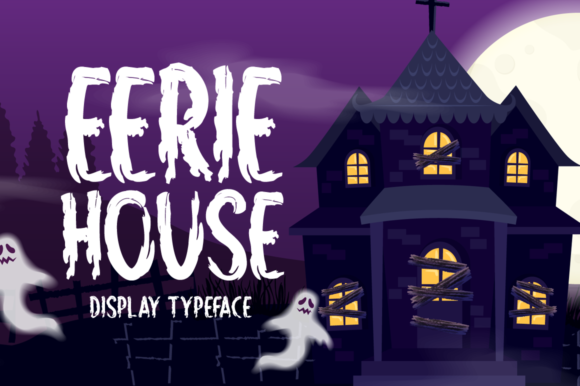
Eerie House is classified as a display font. In typographic terms, "display" indicates that the typeface is optimized for large sizes rather than body text. Its primary function is to grab attention, set a mood, and communicate a specific tone instantly. The design language of Eerie House leans heavily into the macabre, featuring sharp angles, irregular spacing, and a texture that suggests decay, darkness, or unease.
The font’s name itself evokes a sense of place—a dilapidated structure or a haunted location—which aligns with its visual output. It is perfectly suitable for any Halloween-related project or crafty idea. However, limiting its utility to October alone would be a strategic error. The atmospheric weight of Eerie House allows it to serve broader narrative purposes in genres such as horror, thriller, mystery, and even certain sub-genres of fantasy or gothic literature.
Visual Characteristics and Design Intent
When evaluating a display font, one must look at how the letters interact with negative space. Eerie House achieves its eerie effect through deliberate imperfection. The glyphs do not sit on a uniform baseline; instead, they appear slightly askew, mimicking the instability of a crumbling building or a flickering light source. This intentional asymmetry creates tension, which is precisely what a designer seeks when trying to evoke fear or suspense.
The stroke weight varies significantly across characters, adding to the chaotic yet controlled feel. Some letters may appear thin and brittle, while others are bold and heavy, creating a dynamic visual rhythm. This variation prevents the text from feeling static. For projects where movement and energy are desired—even in a still image—this characteristic is invaluable. The font does not scream for attention in a loud, garish way; rather, it whispers with an unsettling presence, which often proves more effective in high-end design work.
Practical Applications and Use Cases
Understanding where a font fits in a production pipeline is crucial for resource allocation. Eerie House is not a Swiss Army knife; it is a specialized tool. Below are the scenarios where this typeface demonstrates its highest value.
- Event Marketing: For haunted houses, horror-themed parties, or seasonal promotions, Eerie House provides immediate contextual clarity. When used on posters, flyers, or social media banners, it reduces the cognitive load for the viewer by visually communicating the event's theme before they even read the details.
- Packaging Design: Small business owners in the confectionery, beverage, or craft industries can leverage this font for limited-edition products. The dark, moody aesthetic pairs well with premium packaging materials like matte black cardstock or textured paper, enhancing perceived value.
- Digital Content Headers: Bloggers and publishers covering topics related to true crime, paranormal investigations, or horror movies can use Eerie House for article headers or featured images. It breaks the monotony of standard sans-serif or serif headlines, increasing click-through rates by standing out in a crowded feed.
- Craft and DIY Projects: As noted, it is ideal for crafty ideas. Whether used in laser-cut signage, vinyl decals, or hand-lettered invitations, the font’s distinct shape holds up well in physical mediums. Its strong outlines ensure that it remains legible even when scaled down or printed on uneven surfaces.
Strengths and Technical Performance
From a technical standpoint, Eerie House offers several advantages that make it a reliable choice for professionals. One of its primary strengths is its flexibility. While it is themed, it does not rely on excessive ligatures or complex glyph substitutions that might break in older software versions. This consistency ensures that files remain editable and compatible across various design platforms, from Adobe Creative Cloud to Canva.
Legibility vs. Atmosphere: A common pitfall in horror typography is prioritizing style over substance, resulting in text that is difficult to read. Eerie House strikes a balanced compromise. While it is stylized, the core shapes of the alphabet remain recognizable. This allows designers to maintain hierarchy within their compositions. For example, using Eerie House for a main headline while pairing it with a clean, simple sans-serif for body copy creates a striking contrast that guides the reader’s eye effectively.
Furthermore, the font exhibits good scalability. Because it is a display font, it performs best at larger sizes. When tested at different scales, the intricate details of the letterforms do not muddy or disappear. This reliability is critical for responsive web design or print materials that require multiple size variations. Designers can trust that the font will maintain its character whether it is displayed on a billboard or a mobile screen.
Limitations and Considerations
No typeface is without its drawbacks, and Eerie House is no exception. Recognizing these limitations is key to avoiding misuse. The most significant constraint is its narrow applicability. Using Eerie House for corporate communications, educational materials, or general informational content would be inappropriate and potentially damaging to brand credibility. Its aggressive aesthetic clashes with tones of professionalism, neutrality, or warmth.
Additionally, overuse can dilute its impact. If every element of a design relies on the same eerie aesthetic, the result can become visually fatiguing. Effective design requires contrast. Pairing Eree House with lighter, cleaner elements helps to ground the composition and prevent it from feeling overwhelming. Designers should also be mindful of kerning and tracking. Due to the irregular nature of the glyphs, automatic spacing may sometimes produce awkward gaps. Manual adjustment is often necessary to achieve a polished look.
Who Should Use Eerie House?
Identifying the right user base helps streamline the decision-making process. The following groups are likely to find the most value in this asset:
- Freelance Graphic Designers: Those specializing in branding for entertainment venues, festivals, or niche markets will appreciate having a high-quality, thematic option in their toolkit. It saves time searching for generic clip-art-style fonts that often look dated.
- Small Business Owners: Entrepreneurs running Halloween pop-up shops, escape rooms, or themed restaurants need marketing materials that quickly establish their brand identity. Eerie House offers a professional alternative to amateur-looking templates.
- Content Creators and Influencers: Individuals who produce horror-themed content on YouTube, TikTok, or Instagram can use this font to create consistent visual branding. It adds a layer of production value to thumbnails and story graphics.
- Self-Publishing Authors: Writers in the horror or thriller genres can use Eerie House for cover designs or promotional materials. It signals to the target audience exactly what genre to expect, aiding in market positioning.
Strategic Integration into Workflow
To maximize the utility of Eerie House, consider integrating it into your design system with intention. Do not treat it as a standalone solution. Instead, view it as a complementary accent. For instance, if you are designing a poster for a horror film, use Eerie House for the title, but pair it with a minimalist layout and ample negative space. This approach highlights the font’s unique qualities without cluttering the design.
Color selection is another critical factor. Eerie House performs exceptionally well against dark backgrounds, particularly blacks, deep purples, or blood reds. However, experimenting with unexpected color combinations—such as pale green or off-white on charcoal—can yield fresh and modern interpretations of the classic horror aesthetic. This flexibility extends the font’s relevance beyond traditional Halloween tropes.
Conclusion
Eerie House is more than just a decorative font; it is a purposeful design tool that brings atmosphere and narrative depth to visual projects. Its strength lies in its ability to convey a specific mood while maintaining enough structural integrity to be usable in professional contexts. While it is not a universal solution, its targeted application makes it an invaluable asset for anyone working in the realms of horror, seasonal marketing, or creative storytelling.
For professionals aged 20–50 who value efficiency, quality, and aesthetic precision, Eerie House offers a compelling option. It respects the intelligence of the viewer by setting a clear tone without relying on cheap gimmicks. By understanding its strengths, acknowledging its limitations, and applying it with strategic intent, creators can elevate their projects from ordinary to unforgettable. The only limit is your imagination, but the foundation is solid.