Bigcake: Strategic Typography for Playful Branding and Clear Communication
In the landscape of visual communication, typography is rarely just about readability; it is a primary vehicle for tone, personality, and brand identity. For entrepreneurs, marketers, and creative professionals aged 20 to 50, selecting the right typeface is a strategic decision that influences how an audience perceives value, trust, and innovation. Bigcake emerges as a distinctive tool in this process—a playful display font designed to inject energy into static designs while maintaining structural integrity. It is not merely a decorative element but a functional asset that, when used with intention, can elevate projects from mundane to memorable.
This article explores the practical applications of Bigcake, moving beyond aesthetic appreciation to discuss its role in planning, branding, and effective communication. By understanding the technical capabilities of PUA encoding and the psychological impact of playful design, creators can make informed decisions that align with their long-term goals.
Understanding Bigcake: More Than Just a Font
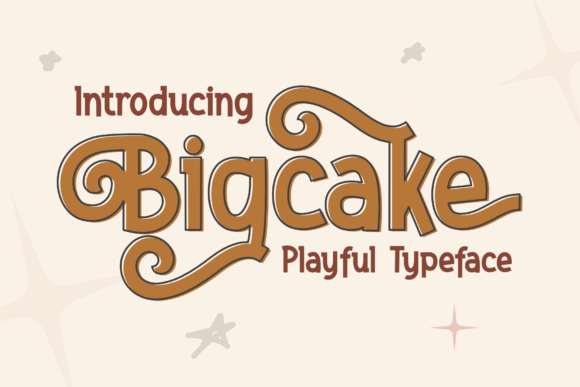
Bigcake is classified as a display font, meaning it is optimized for large sizes and short bursts of text rather than body copy. Its defining characteristic is its playfulness. The letterforms are rounded, bold, and inviting, creating an immediate sense of approachability. In a digital environment saturated with minimalist sans-serifs and rigid geometric fonts, Bigcake offers a refreshing contrast. It signals creativity, fun, and a human-centric approach to business or content creation.
The strategic value of Bigcake lies in its ability to break patterns. When a user encounters a feed of uniform, serious corporate messaging, a well-placed instance of Bigcake acts as a visual interruptor. This disruption captures attention without requiring loud colors or complex imagery. For freelancers and small business owners, this means lower costs for engagement. You do not need expensive motion graphics to stand out; you need the right typographic voice.
The Technical Advantage of PUA Encoding
One of the most significant practical benefits of Bigcake is its use of PUA (Private Use Area) encoding. For designers and developers who have struggled with inconsistent font rendering across different platforms, this feature is a game-changer. Standard font files often limit access to basic glyphs, hiding special characters, swashes, and alternate forms behind complicated OpenType features that may not be supported by all software.
With PUA encoding, every glyph, swash, and stylistic alternate is mapped directly to a specific character code in the font’s private space. This means:
- Universal Access: You can access all decorative elements regardless of whether your software supports advanced OpenType features.
- Predictable Rendering: The font behaves consistently across word processors, design tools, and web environments, reducing the risk of broken layouts.
- Efficiency: There is no need to search through extensive character maps manually. You know exactly which code triggers the desired swash or variant, streamlining the workflow for publishers and bloggers who need speed alongside quality.
This technical reliability supports productivity. When you remove the friction of troubleshooting font issues, you can focus on the core message. For educators and presenters, this consistency ensures that slides and handouts look polished every time, reinforcing professionalism even within a playful design framework.
Strategic Applications in Branding and Marketing
Using Bigcake effectively requires aligning its playful nature with your brand’s positioning. It is not suitable for every context, but where it fits, it can drive significant results. Consider how typography influences customer experience and perception.
Building Approachable Authority
Many professionals struggle with the balance between being taken seriously and being seen as accessible. Rigid, traditional fonts can create distance, while overly casual scripts can undermine credibility. Bigcake occupies a unique middle ground. Its bold weight conveys confidence and stability, while its rounded shapes suggest friendliness and openness.
This makes it ideal for:
- Startup Launches: New brands often use Bigcake to signal that they are modern, innovative, and not bound by old industry norms.
- Educational Content: Teachers and course creators can use it to make learning materials feel less intimidating and more engaging for students.
- Lifestyle Brands: Businesses in food, travel, hobbies, and wellness can leverage the font’s warmth to connect emotionally with their audience.
Enhancing Visual Hierarchy
In information-dense environments, such as blog posts or marketing emails, visual hierarchy is critical. Bigcake serves as an excellent tool for headings, pull quotes, and call-to-action buttons. Because it is a display font, it naturally draws the eye. Using it strategically helps guide the reader’s journey through your content.
For example, a blogger might use a standard serif font for body text to ensure readability, but switch to Bigcake for section headers. This creates a clear distinction between the narrative and the structure, allowing readers to scan content quickly. This approach respects the reader’s time—a key component of good user experience—while adding visual interest.
Planning Your Use Case: Context Matters
Before integrating Bigcake into your design system, it is essential to evaluate the context. Misuse of a playful font can lead to confusion or a lack of professionalism. Strategic planning involves asking the right questions about your goals and audience.
When to Use Bigcake
Bigcake shines in contexts where the goal is to evoke emotion, spark curiosity, or simplify complex ideas. It is particularly effective in:
- Social Media Graphics: Short, punchy messages benefit from the font’s high legibility at small sizes on mobile devices.
- Event Posters and Flyers: The playful nature of Bigcake suits community events, workshops, and creative gatherings.
- Product Packaging: For consumer goods targeting families or younger demographics, Bigcake can make packaging stand out on crowded shelves.
When to Avoid Bigcake
There are scenarios where Bigcake may undermine your objectives. It should generally be avoided in:
- Legal or Financial Documents: Where precision and gravity are paramount, the whimsical nature of Bigcake can appear unprofessional.
- Long-Form Body Text: As a display font, Bigcake lacks the subtle nuances required for comfortable reading over many paragraphs. Using it for body copy will cause eye strain and reduce comprehension.
- Global Corporate Communications: If your brand needs to convey strict neutrality or global seriousness, a highly stylized font like Bigcake may distract from the message.
Decision-Making Guidance for Designers
To maximize the impact of Bigcake, adopt a deliberate approach to its implementation. Randomly applying playful fonts often results in cluttered designs that fail to communicate clearly. Instead, treat Bigcake as a strategic accent rather than a default style.
Pairing for Balance
The success of Bigcake often depends on what it is paired with. A common mistake is combining it with other display fonts, which creates visual competition. Instead, pair Bigcake with neutral, highly readable typefaces. A clean sans-serif or a classic serif provides a stable foundation that allows Bigcake to pop without overwhelming the composition.
For instance, a marketing email might use a simple Helvetica or Roboto for the main content, reserving Bigcake exclusively for the subject line and the final call-to-action button. This creates a clear visual path for the user, enhancing conversion rates by making the desired action unmistakable.
Consistency Across Platforms
Because Bigcake uses PUA encoding, ensuring consistency across different media is easier than with other specialty fonts. However, designers must still test their work. Check how the font renders on various screen sizes and print resolutions. Pay attention to kerning and spacing, as playful fonts can sometimes appear uneven if not carefully adjusted. Small adjustments in tracking can significantly improve the overall polish of a design.
Risks and Mitigation Strategies
Even the best tools carry risks if used improperly. With Bigcake, the primary risk is overuse. When everything is emphasized, nothing is emphasized. If every headline uses Bigcake, the design loses its hierarchy, and the brand voice becomes monotonous.
To mitigate this, establish clear guidelines for when and how Bigcake is used. Define specific use cases, such as "only for headlines under 10 words" or "only for promotional banners." These constraints force creativity within boundaries, leading to more thoughtful and impactful designs.
Another risk is alienating segments of your audience. Not everyone responds positively to playful aesthetics. Some professional audiences may perceive Bigcake as childish or untrustworthy. Conduct user testing or gather feedback from your target demographic before fully committing to Bigcake as a core brand element. Understanding your audience’s preferences is crucial for long-term success.
Conclusion: Intentional Creativity
Bigcake is more than a pretty font; it is a strategic asset for anyone looking to enhance their visual communication. Its playful character, combined with the technical reliability of PUA encoding, makes it a versatile choice for entrepreneurs, marketers, and creators. By using Bigcake intentionally—paired with appropriate typefaces, applied in the right contexts, and balanced against serious content—you can create designs that are not only visually spectacular but also effective in achieving your goals.
Remember that typography is a form of non-verbal communication. Every font choice sends a message about who you are and what you value. Bigcake says, "We are creative, approachable, and confident." Use it wisely, and it will serve as a powerful ally in your quest for better results and stronger connections with your audience.