Why Chubby Toon Is the Secret Weapon for Projects That Need to Feel Human
In a digital landscape dominated by sleek, minimalist sans-serifs and rigid geometric typefaces, finding a font that actually feels warm can be surprisingly difficult. This is where Chubby Toon steps in. It isn’t just another decorative display font; it’s a personality-driven tool designed to inject immediate playfulness and authenticity into your work. If you have ever struggled to make a school project, a children’s activity sheet, or a small business logo feel inviting rather than corporate, this bubbly typeface might be exactly what your design needs.
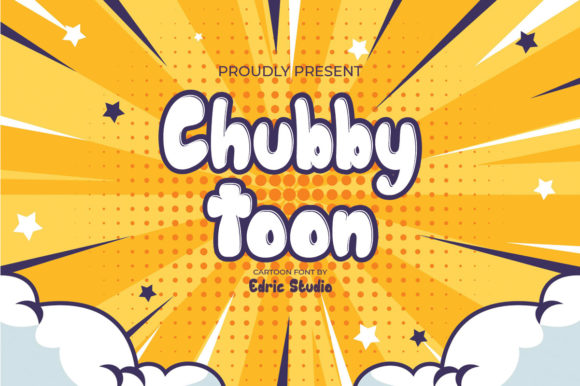
The beauty of Chubby Toon lies in its simplicity. It doesn’t try to be clever with complex ligatures or obscure stylistic sets. Instead, it relies on rounded edges, generous spacing, and a distinctively soft silhouette that mimics the feeling of hand-drawn lettering without the inconsistency of actual handwriting. For creators who need to convey approachability quickly, this font does the heavy lifting before the user even reads the text.
Understanding the Vibe: More Than Just "Cute"
When we talk about Chubby Toon being "cute," we aren’t referring to something childish in a negative sense. We are talking about accessibility. In typography, cuteness often translates to trustworthiness and safety. A child looks at a page set in Chubby Toon and feels like they are entering a safe, fun space. An adult looking at a bakery menu or a craft workshop flyer sees warmth and craftsmanship.
The font embodies a sense of authenticity because it lacks the cold precision of machine-generated geometric fonts. The slight irregularities in the stroke widths and the soft curves suggest human touch. This is crucial for personal brands, independent educators, and hobbyists who want to show their audience that there is a real person behind the product. It bridges the gap between professional presentation and personal connection.
Real-World Applications: Where Chubby Toon Shines
You don’t need to be a professional graphic designer to benefit from using Chubby Toon effectively. Its versatility allows it to fit into various scenarios where tone is just as important as information. Here is how different users are leveraging this font in practical settings.
Educators and Classroom Materials
If you are a teacher, a homeschooling parent, or an educational content creator, engagement is everything. Standard serif fonts can sometimes feel too academic or intimidating for younger learners. When creating worksheets, flashcards, or classroom labels, switching to Chubby Toon can lower the anxiety barrier for students. Imagine a math worksheet titled "Fun with Numbers" in Chubby Toon versus Arial. The former invites participation; the latter demands compliance. Furthermore, for special education resources, the clear, open shapes of the letters improve legibility for readers who struggle with dense text blocks.
Small Business Branding for Lifestyle Niches
Entrepreneurs in the lifestyle sector—think handmade jewelry sellers, organic baby clothing brands, or local bakeries—often compete on emotion rather than price. Your brand voice needs to reflect your product. If you sell cozy knitwear, a sharp, aggressive font sends the wrong message. Chubby Toon aligns perfectly with brands that prioritize comfort, joy, and community. It works exceptionally well for:
- Event Invitations: Birthday parties, baby showers, and community bake sales instantly feel more festive when the header uses a playful display font.
- Social Media Graphics: On platforms like Instagram or Pinterest, bold, rounded text stands out in crowded feeds. It stops the scroll because it looks friendly and unpretentious.
- Packaging Labels: For small-batch producers, labeling jars of jam, candles, or soaps requires a font that fits on small spaces without losing character. Chubby Toon maintains its shape even at smaller sizes, provided it is used for headlines rather than body text.
Creative Hobbyists and DIY Enthusiasts
For bloggers and hobbyists documenting crafts, recipes, or travel diaries, consistency in visual style helps build a recognizable aesthetic. Using Chubby Toon for post titles, recipe headers, or photo captions creates a cohesive "look" that feels curated but effortless. It adds a layer of polish to homemade projects, making them look professionally designed without requiring advanced software skills.
Strategic Considerations Before You Start Designing
While Chubby Toon is a powerful tool, it is not a universal solution. Misusing a display font can lead to readability issues that frustrate your audience. To get the most out of this typeface, consider these practical guidelines.
Pairing is Key
One of the biggest mistakes users make is pairing two busy fonts together. Since Chubby Toon has a strong personality, it needs a calm partner. Avoid pairing it with other decorative fonts. Instead, pair it with a clean, neutral sans-serif or a simple serif for body text. For example, use Chubby Toon for the main headline ("Welcome to My Garden!") and a straightforward font like Helvetica or Georgia for the descriptive paragraphs. This contrast ensures that while the eye is caught by the title, the information remains easy to digest.
Respect the Hierarchy
This font is best suited for short bursts of text. It excels as a display font for titles, headers, buttons, and slogans. However, it is generally not ideal for long-form body copy. Reading large blocks of text in a bubbly, rounded font can cause eye strain because the uniformity of the shapes reduces the distinctiveness of each word. Use it to highlight key phrases, call-to-action buttons, or section breaks, but let simpler fonts handle the detailed explanations.
Context Matters
Always ask yourself: Does this font match the intent of the message? Chubby Toon is perfect for lighthearted, positive, and creative contexts. It is less appropriate for serious news updates, legal documents, or financial reports where authority and seriousness are required. Using it in a context where gravity is needed can undermine your credibility. Ensure the tone of your content matches the playful nature of the typeface.
Technical Tips for Implementation
Whether you are downloading Chubby Toon for a design project or incorporating it into a website, keep these technical aspects in mind to ensure quality output.
- Check Licensing: Always verify the license terms. Some fonts are free for personal use only, meaning you cannot use them for commercial products like t-shirts or branded merchandise without purchasing a commercial license. Respecting intellectual property protects your business and supports the type designers.
- Watch Your Kerning: Display fonts often require manual adjustment of spacing between specific letter pairs. While Chubby Toon is likely designed to be fairly forgiving, checking the space between letters like "A" and "V" or "T" and "o" can prevent awkward gaps that distract the reader.
- Color Choices: The impact of Chubby Toon is amplified by color. Pastel shades enhance its softness, while bright primary colors boost its energy. Avoid low-contrast color combinations (like light gray on white) which can make the already soft edges disappear against the background.
Final Thoughts on Choosing the Right Voice
Choosing a font is ultimately about choosing a voice. In a world where digital communication can often feel sterile and detached, Chubby Toon offers a way to reintroduce humanity into your designs. Whether you are a teacher trying to engage a restless class, a freelancer trying to stand out in a saturated market, or a parent making a birthday card, this font provides a reliable way to say, "I am here, I am friendly, and I care about what I am sharing."
By understanding its strengths and respecting its limitations, you can use Chubby Toon not just as a decoration, but as a strategic element that enhances communication. It reminds us that design is not just about aesthetics; it is about how we make people feel. And in many cases, making them feel welcome is the most effective strategy of all.