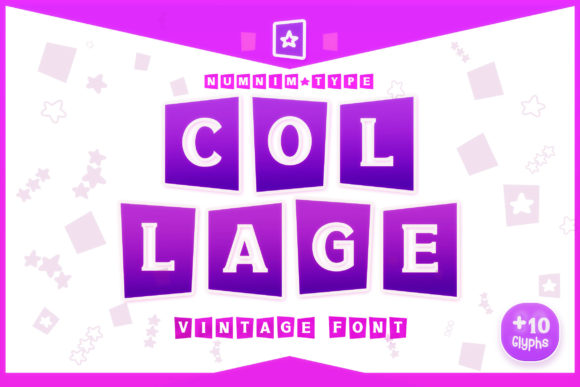
Collage Font Evaluation
In the landscape of digital typography, selecting the right typeface is often a balancing act between aesthetic appeal and functional utility. Designers frequently seek fonts that offer visual interest without sacrificing readability or ease of implementation. One such typeface that has garnered attention for its distinctive character is Collage. Marketed as a cool, fun, and adaptable display font, Collage promises a unique visual experience through its extensive use of glyphs and ligatures. However, understanding the technical underpinnings and practical applications of this font is essential before integrating it into professional projects.
Understanding Collage: A Display Typeface
Collage is categorized primarily as a display font. In typography, display fonts are designed to be used at large sizes, such as in headlines, posters, logos, and banners, rather than for long-form body text. The design philosophy behind Collage leans towards playfulness and adaptability. It is not intended to recede into the background; instead, it commands attention. The "fun" aspect mentioned in its description suggests a whimsical or eclectic personality, making it suitable for creative industries where standing out is a priority.
The term "adaptable" in the context of Collage refers to its versatility across various creative mediums. Whether applied to a music festival poster, a children’s book cover, or a social media graphic, the font aims to provide a cohesive yet dynamic look. However, adaptability does not imply universal applicability. Like all display fonts, Collage requires careful consideration of context to ensure it enhances rather than detracts from the overall design message.
Technical Accessibility via PUA Encoding
A significant technical feature of Collage is its encoding method: PUA (Private Use Area) encoding. To understand why this matters, it is helpful to distinguish between standard Unicode encoding and PUA. Standard fonts map characters to specific code points within the Unicode standard, ensuring that text renders consistently across different devices and platforms. PUA, on the other hand, utilizes a reserved section of the Unicode block that is not assigned to any standard characters by the Unicode Consortium.
For designers, PUA encoding offers both advantages and challenges:
- Access to Extensive Glyphs: Because the standard character set is limited, PUA allows font creators to include thousands of additional symbols, alternate characters, and decorative ligatures without conflicting with standard text. This means users can access a vast library of "amazing glyphs" directly from the font file.
- Ease of Access: Modern design software and operating systems have improved their support for PUA fonts. Users can typically access these special characters through glyph panels or character maps, allowing for easy insertion into designs.
- Compatibility Risks: The primary tradeoff of PUA encoding is compatibility. If a recipient of your design file does not have Collage installed, or if they open the file in a platform that does not embed the font properly, the PUA characters may not render correctly. They might appear as missing boxes, default fallback fonts, or incorrect symbols. Therefore, embedding the font in PDFs or exporting images is crucial when sharing designs created with Collage.
Benefits of Using Collage
When evaluating Collage for a project, several benefits stand out. First, the sheer volume of available glyphs provides a high degree of customization. Designers can mix and match characters to create unique logotypes or typographic treatments that would be difficult to achieve with standard alphabets. This variety supports creativity, allowing for the generation of outcomes that feel bespoke and tailored.
Secondly, the "fun" and "cool" aesthetic aligns well with contemporary design trends that favor expressive and personality-driven visuals. In an era where digital content competes for attention, a typeface that immediately conveys energy and style can be a valuable asset. Collage’s ability to generate visually striking results with minimal effort makes it an efficient choice for quick-turnaround creative tasks.
Tradeoffs and Considerations
Despite its strengths, there are important considerations to keep in mind. The playful nature of Collage may not suit every brand identity. For corporate communications, legal documents, or academic publications, the whimsical elements of Collage could undermine perceived authority or clarity. It is essential to assess whether the tone of the project matches the personality of the font.
Additionally, the reliance on PUA encoding necessitates a workflow that accounts for potential rendering issues. Designers must ensure that final deliverables are formatted in ways that preserve the font’s integrity. This might involve converting text to outlines in vector software or using high-resolution image exports. While these steps add time to the workflow, they mitigate the risk of broken links or missing characters in the final output.
Situational Fit: When to Choose Collage
Collage is a strong fit for projects where visual impact takes precedence over textual density. Ideal scenarios include:
- Event Marketing: Posters, flyers, and digital ads for concerts, art exhibitions, or parties benefit from the font’s energetic vibe.
- Branding for Creative Industries: Studios specializing in graphic design, fashion, or entertainment may find Collage aligns with their innovative brand image.
- Social Media Graphics: Short-form content that relies on bold visuals to capture user attention in a feed is well-suited to display fonts like Collage.
- Decorative Typography: Projects that focus on artistic lettering, such as custom logos or quote graphics, can leverage the unique ligatures and glyphs to create memorable visuals.
When to Consider Alternatives
There are situations where Collage may not be the optimal choice. If a project requires extensive body text, a more legible serif or sans-serif font should be prioritized. Similarly, if the target audience includes users on diverse platforms with varying font support capabilities, a standard Unicode font might be safer to ensure consistent accessibility. Additionally, brands aiming for a minimalist, serious, or highly professional tone might find Collage too distracting or informal.
Practical Decision-Making Insights
To determine if Collage aligns with your goals, consider the following questions during the evaluation process:
- What is the primary function of the text? Is it decorative or informational?
- Who is the audience? Will they appreciate the playful aesthetic, or will it confuse them?
- What is the delivery format? Can you control the environment in which the font is displayed (e.g., embedded PDFs vs. plain text emails)?
- Do you need extensive character variations? If yes, Collage’s PUA features offer significant value.
In conclusion, Collage is a specialized tool in the designer’s arsenal. Its strength lies in its ability to create engaging, visually rich displays through its extensive glyph set and playful design. By understanding its technical requirements and appropriate use cases, designers can confidently integrate Collage into their creations, leveraging its unique characteristics to produce impactful results. As with any typographic choice, success depends on matching the font’s personality to the project’s intent.